
 AFCON 2025


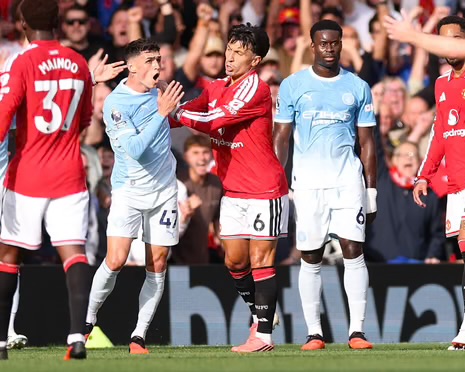
Manchester City left Old Trafford with a 1-0 victory over Manchester United on Sunday, but the scoreline only tells part of the story.
City played for more than an hour with 10 men after Phil Foden’s early red card. United had the numerical advantage, the home crowd behind them and two efforts that struck the woodwork. Yet it was City who found the decisive moment through Erling Haaland.
For Enzo Maresca, it was a victory built on organisation, resilience and clinical finishing. For Michael Carrick and United, it was another afternoon in which the team had opportunities but struggled to turn them into a result.
Here are three takeaways from the 199th Manchester derby.
1. City’s character mattered more than the result
The defining moment of the first half came in the 23rd minute.
Foden was sent off after reacting to Bruno Fernandes, kicking out from the floor after the United captain caught him in the back. Michael Oliver showed him a red card, and VAR upheld the decision.
At Old Trafford, with more than an hour still to play, it looked like the game had swung decisively in United’s favour.
Instead, City showed another side of themselves.
Maresca reorganised his side into a compact defensive shape, allowing United possession but denying them the spaces required to turn that possession into clear chances. City limited United to just three shots on target throughout the afternoon.
Elliot Anderson and Enzo Fernández were particularly important in helping City maintain their structure in midfield, while the rest of the team remained disciplined without the ball.
It was not spectacular football. It did not need to be.
City understood that the game had changed and adapted accordingly. Rather than chasing a second goal or leaving themselves exposed, they waited for their opportunity.
When it arrived, they took it.
For Maresca, winning his first Manchester derby since taking over from Pep Guardiola under those circumstances will carry significance beyond the three points. City showed that they can win a game without dominating it, and, more importantly, that they can withstand serious adversity without losing their shape.
2. Haaland remains City’s most reliable answer
For long periods, Haaland was relatively quiet.
But that is precisely what makes the Norwegian such a dangerous weapon.
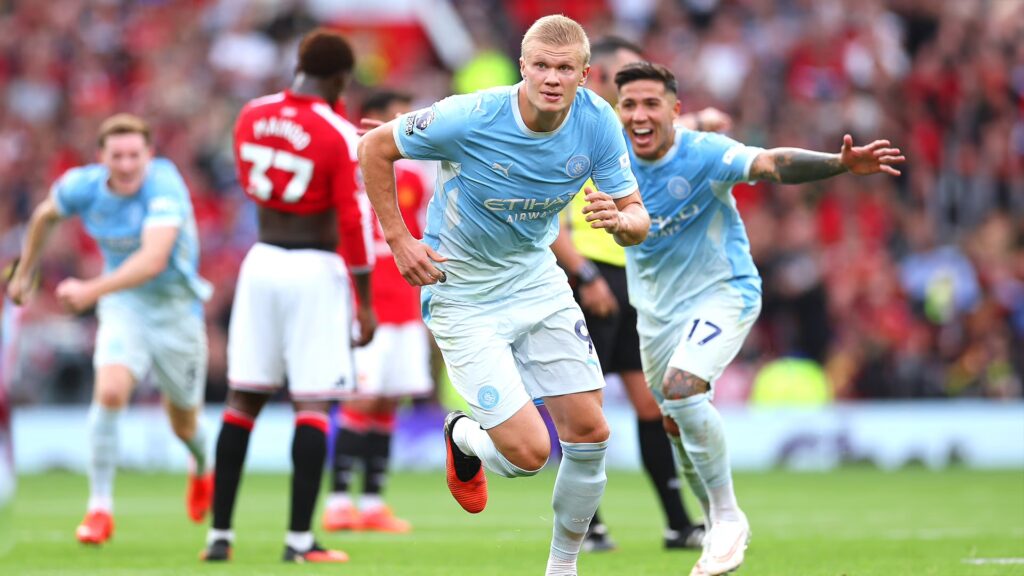
City needed one moment, and Haaland converted it.
The goal came in the 60th minute after Josko Gvardiol’s cross from the left took a deflection off Patrick Dorgu. Enzo Fernández attempted to reach the ball but missed it, allowing Haaland to arrive at the far post and finish from a tight angle.
The assistant referee initially ruled the goal offside, but VAR intervened after a lengthy review.
Dorgu’s outstretched foot had played Haaland onside, while Fernández was judged not to have interfered with the play.
It was Haaland’s ninth goal in Manchester derbies, moving him clear as the Premier League’s leading scorer in the fixture.
That record says plenty about his importance to City in this particular game.
United had their moments. Rashford hit the woodwork from a free-kick and Mainoo struck the post from distance. But when City finally found an opening, Haaland provided the ruthlessness United lacked.
That remains one of the biggest differences between these two sides.
United needed sustained pressure to create a goal. City needed one opening.
Haaland made sure it counted.
3. United wasted the advantage they had been handed
This will be the most frustrating takeaway for United.
A Manchester derby is difficult enough without being asked to play against 10 men for more than an hour.
United had exactly that advantage, and could not exploit it.
After Foden’s dismissal, United needed to increase the tempo, move City around and force the visitors to defend deeper and deeper. Instead, their attacking play became increasingly predictable.
There were flashes of danger, but not enough sustained pressure.
Dorgu struggled to influence the game from the left, while United’s attacking players found it difficult to consistently break down City’s compact shape.
Even when United did get opportunities, they failed to make them count.
The two efforts that hit the woodwork demonstrated that they were not completely without threat, but ultimately the team could not produce the quality required to punish a 10-man opponent.
Donnarumma’s late save from Bryan Mbeumo completed City’s escape.
For United, the defeat leaves them with four points from their opening four matches and sitting 13th in the table.
The concern is not simply that they lost a derby. It is how they lost it.
They had the numerical advantage, home support and enough time to take control of the game. Instead, City remained composed, scored the only goal and defended their lead.
That raises familiar questions about United’s ability to impose themselves when the stakes are highest.
City, meanwhile, leave Old Trafford with more than bragging rights.
They have a perfect start, 12 points from four matches and evidence that under Maresca they can win in different ways.