 AFCON 2025


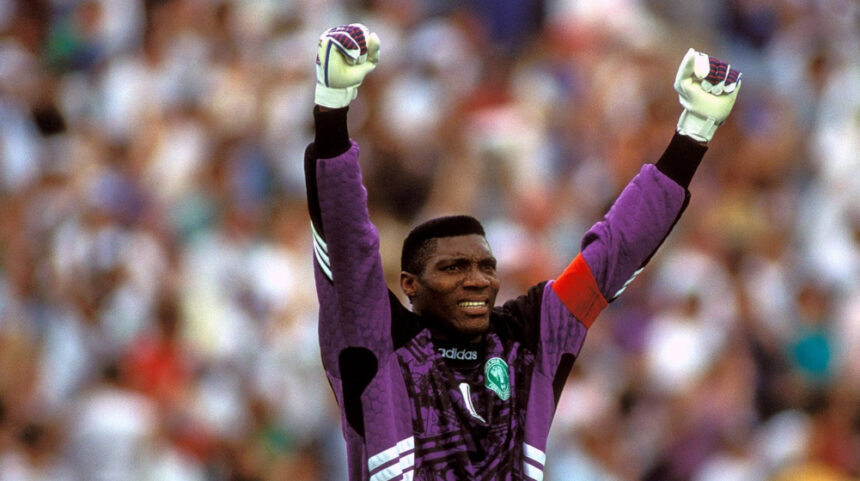
Peter Rufai is a former goalkeeper for the Super Eagles of Nigeria, and he is considered arguably the greatest the country has ever produced. The legendary Rufai, popularly referred to as “Dodo Mayana,” represented Nigeria at three Africa Cup of Nations and was part of the triumphant team at the 1994 Africa Cup of Nations in Tunisia. Peter Rufai captained the Super Eagles as the team made their debut at the 1994 FIFA World Cup in the United States. He was also in goal four years later at the France 1998 World Cup.
The Lagos-born goalkeeper played in the finest era of Nigeria’s football and was known for his imposing stature, composure, and sharp reflexes, especially in saving penalties.
Ruafi’s heroics in between the sticks took him from the shores of Nigeria to the Benin Republic and then to Europe, where he spent over a decade keeping for club sides in Belgium, Portugal, and Spain before he called time on his career.
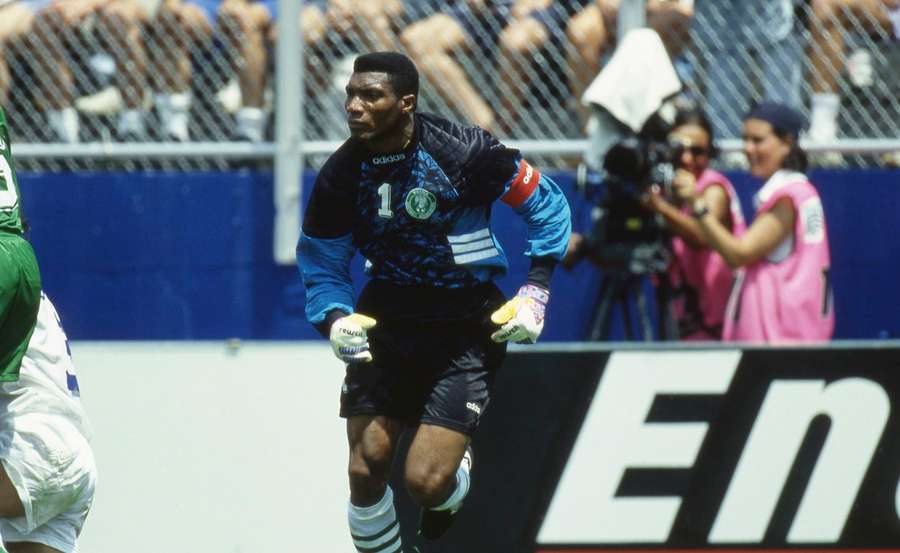
Despite his brilliance and experience, Peter Rufai never got the opportunity to work with any of the men’s national teams including the Super Eagles as a goalkeeper coach. Rufai was very involved in grassroots development, scouting, and nurturing talents in the country nonetheless.
Unfortunately, Peter Ruafai died on Thursday 3, July 2025, aged 61, after a brief illness, according to the obituary released by his family 24 hours after he died.
This post traces the background, career, achievements, family, and engagements of Peter Rufai before his death.
Peter Rufai’s Early Beginnings
The former Super Eagles goalkeeper was born in the Oshodi area of Lagos State three years after Nigeria’s independence. Peter Rufai was born on 24 August 1963 and grew up in the city where he started playing football. Rufai featured for Stationery Stores F.C. and Femo Scorpions before switching to Benin Republic AS Dragons FC de l’Ouémé in 1986. Peter Rufai comes from a royal family, as his father was a king in the area.
While at Stationery Stores, a teenage Peter Rufai was pivotal to the memorable run of the Lagos-based team in the 1980 FA Cup and the 1981 Cup-winners-Cup on the continent.
Peter Rufai was in goal as Stationery Stores took on Union Douala of Cameroon in the final of the Cup-winners-Cup in 1981. Rufai was impressive in the first leg as he saved a penalty in the goalless draw in Douala.
Unfortunately, the second leg didn’t go as planned, as the referee handed Yomi Peters a red card for a reckless and needless tackle on the opposition goalkeeper. Union Douala took advantage of the numerical difference and took the lead. The collision leading up to the goal ended Peter Rufai’s game as he stretched off the pitch.
Peter Rufai @ AFCON
He was one of the core players coach Festus Onigbinde built his team around in the post-1980 AFCON triumph on home soil. Rufai was in goal as Nigeria, for the first time, beat Ghana away from home. The match took place in front of a packed Stadium in Kumasi.
Rufai represented the Super Eagles of Nigeria at the 1984, 1988, and 1994 Africa Cup of Nations in Côte d’Ivoire, Morocco, and Tunisia, respectively. At the 1988 tournament, he saved Lakhder Belloumi’s penalty kick to help Nigeria qualify for the final. Sadly, the Super Eagles lost 1-0 to Cameroon in the final.

In 1994, Peter Rufai stepped up again as he saved Armani Yao’s penalty in the semi-final, which allowed the late Rashidi Yekini to send Nigeria to the final.
Rufai was crucial in the final as he made two important saves late in the game against Zambia. He denied Malitoli and Kalusha Bwalya to help the Super Eagles win their second Africa Cup of Nations title.
How Peter Rufai got into Clemens Westerhof’s USA 1994 Squad
How Peter Rufai got the name Dodo Mayana
Peter Rufai explained that he got the nickname from the Portuguese fans while on training camp with the Super Eagles in the 1990s. He narrated the story behind the name in a 2015 interview:
The name Dodomayana was given to me after many years of service with the Super Eagles. We were on a training tour of Portugal and during some of the training sessions which I used as medium to showcase my talent to the coach that he can depend on me as a reliable substitute or first team player, I performed extremely good. The coach then was so technical that he would spot exactly five metres away from you. So, I make sure I saved all my balls during the session to the extent that I stretched myself beyond limit to grab balls going over the bar or inches away. Therefore, my performance was amazing to the Portuguese fans around the stadium to the extent that they were clapping continuously and hailing all my moves. So, when the referee, Otto Gloria blew the final whistle to indicate end of session, the fans watching the training session shouted no no no….. that we should continue the training session. Then, Peter Fregene called on me Dodo, the fans heard it and also shouted Dodo which means continue in Portuguese language. Then one of the fans shouted dodo mayana? (continue tomorrow?). Then I replied them that amayana dodo. That’s how the name came into existence because the fans referred to me as Dodo Mayana.
Peter Rufai played for a couple of clubs in Europe and spent over a decade playing for clubs in Belgium, the Netherlands, Portugal, and Spain. Rufai signed for Lokoren in Belgium in 1987. He spent four years at the club before he joined Beveren in 1991. After two years, he moved to the Dutch Eredivisie and signed for Go Ahead Eagles but left after a season.
Rufai joined Farense in 1994 and stayed until 1997 before he moved to the other side of Iberia. He played for Hercules and Deportiva La Coruna between 1997 and 1999 before he returned to Portugal to play for Gil Vicente for a year.
Peter Rufai returned to Spain in 2003. He settled in the country and set up a goalkeeper’s school.
Peter Rufai death
After many years of active duty on and off the pitch, Peter Rufai died after a brief illness according to the Obituary published by his family. Peter Rufai died on Thursday, July 3, 2025, at about six o’clock
Children
Peter Rufai is survived by six children: Don Okikiola I. Rufai (Son), Tunde Rufai (Son), Confidence Rufai (Daughter ), Biodun Rufai (Son), Bright Rufai (Son), and David Rufai (Son).
Peter Rufai’s football academy
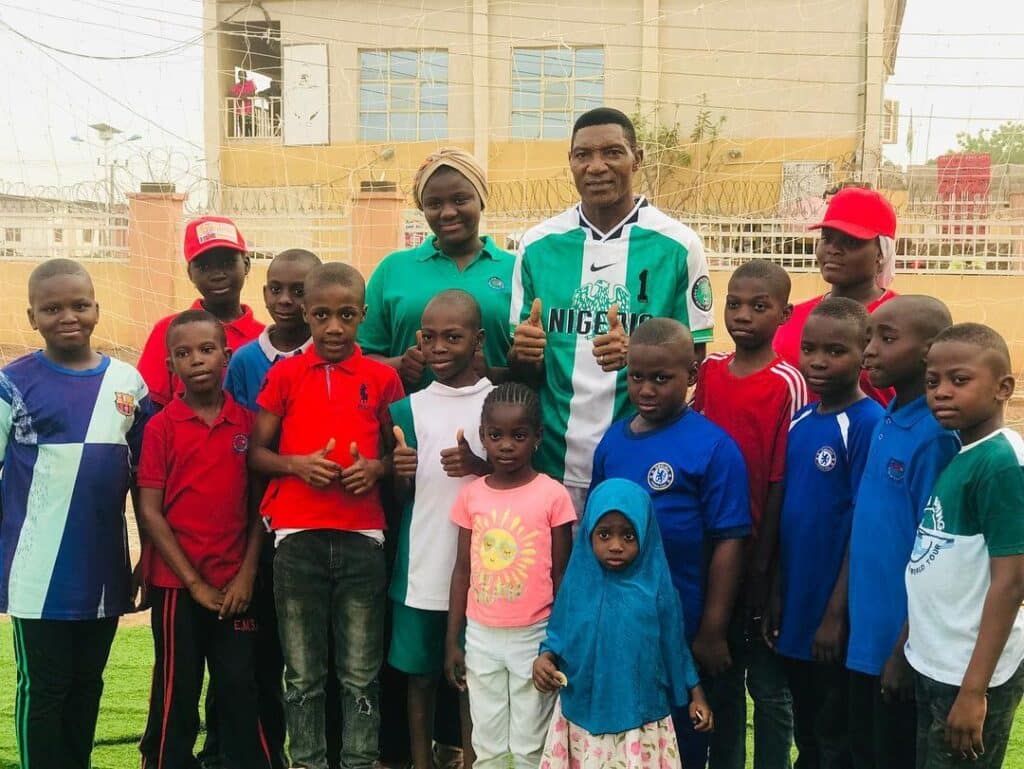
The name of Peter Rufai’s academy, known as Staruf Football Academy, was set up in Lagos by the former Super Eagles goalkeeper on 1 January 2010, to train and develop aspiring footballers with a passion for playing professionally through training while engaging in other professional programs. Staruf Academy is located at 1 Sowande Street, Off Rev Emma Adubifa, Omole Phase 2, Lagos.
Net worth
As of 2025, Peter Rufai’s net worth is not available for public consumption. However, from public appearances and engagements on television, and radio, and partnerships with private enterprises, he lived a comfortable life.
Is Peter Rufai married?
Yes, Peter was married to Mikaila Rufai, and their union is blessed with children.
How many houses does Peter Rufai have?
The Nigerian goalkeeping icon had a couple of houses within and beyond Nigeria. He had houses in Lagos and Abuja, according to findings.
Peter Rufai was one of the beneficiaries of the 1994 Super Eagles team, former president of Nigeria, Muhammadu Buhari gifted houses in 2021.
How many children does Peter Rufai have?
Peter Ruafi had six children, according to the Obituary released by his family following his death. One of his sons, Senbaty, once played for Sunshine Stars in the Nigeria Premier League.
Social Media
Peter Rufai had accounts on X and Instagram where he shares updates on his engagements.