 AFCON 2025


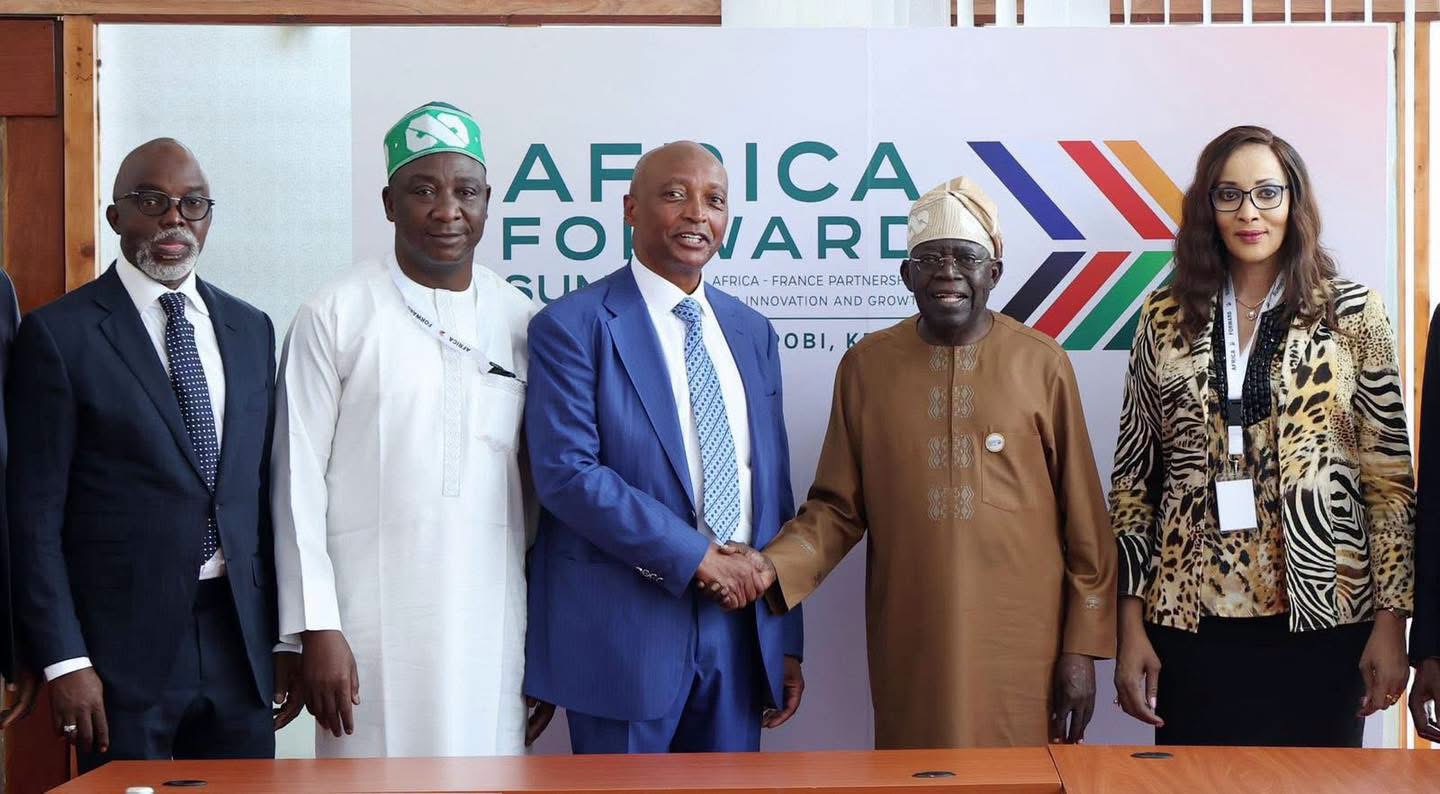
President Bola Tinubu has directed a comprehensive overhaul of Nigerian football, following repeated failures by the Super Eagles and Super Falcons to qualify for major regional, continental and global competitions.
The directive was issued on Thursday, August 27, 2026, through a statement by the President’s Special Adviser on Information and Strategy, Bayo Onanuga, and released through State House digital channels.
Tinubu said the reform must address longstanding structural weaknesses in the administration and development of football in Nigeria, rather than focus solely on short-term results.
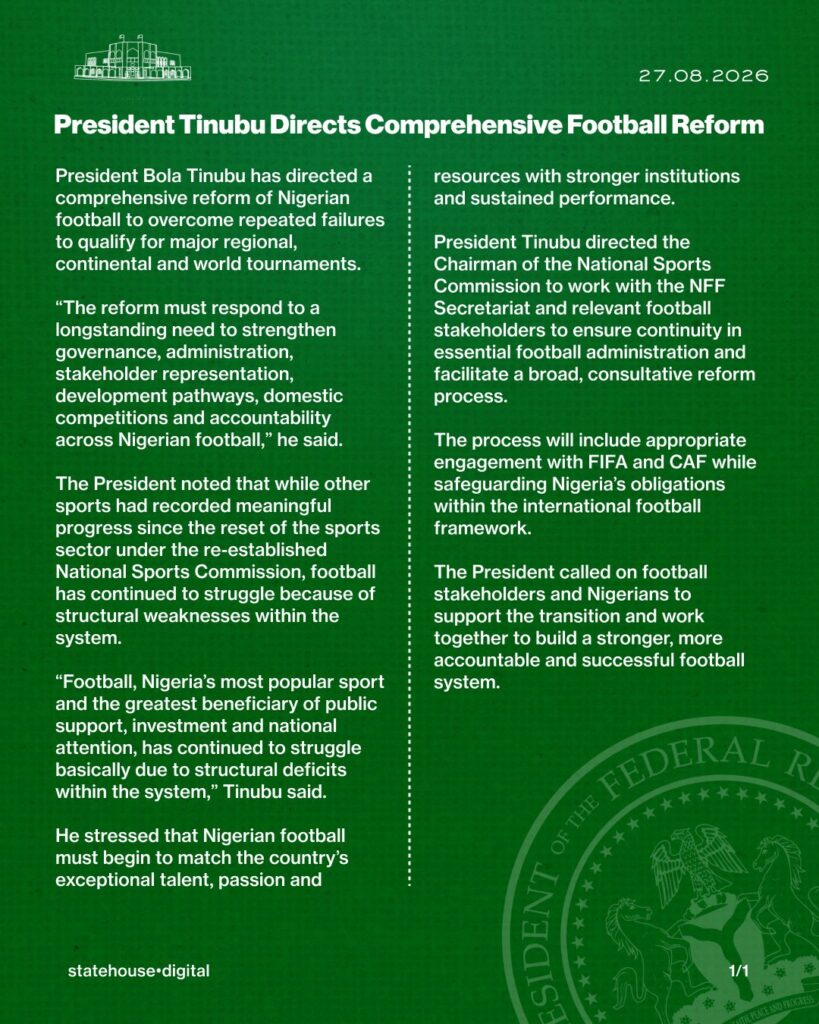
“The reform must respond to a longstanding need to strengthen governance, administration, stakeholder representation, development pathways, domestic competitions and accountability across Nigerian football,” the President said.
The President noted that while other sports have recorded progress following the reset of the sports sector under the re-established National Sports Commission, football has continued to struggle despite being the country’s most popular sport and the biggest beneficiary of public attention and investment.
“Football, Nigeria’s most popular sport and the greatest beneficiary of public support, investment and national attention, has continued to struggle basically due to structural deficits within the system,” Tinubu said.
He said Nigeria must now match its abundance of football talent, passion and resources with stronger institutions and sustained performance.
The presidential intervention comes after the Super Eagles failed to qualify for the 2026 FIFA World Cup, marking their second consecutive absence from the tournament after missing Qatar 2022.
The Super Falcons also suffered a historic setback after failing to qualify for the 2027 FIFA Women’s World Cup — the first time Nigeria’s senior women’s team has missed the tournament.
Pressure on the Nigeria Football Federation intensified following the setbacks, with NFF President Ibrahim Gusau and several board members announcing their resignations on Thursday, the same day as the presidential directive.
What happens next
Tinubu has directed the Chairman of the National Sports Commission to work with the NFF Secretariat and relevant football stakeholders to ensure continuity in essential football administration while leading a broad and consultative reform process.
The process is expected to involve engagement with FIFA and CAF, while ensuring that Nigeria continues to meet its obligations under the international football framework.
The reform agenda identified by the President covers six key areas: governance, administration, stakeholder representation, development pathways, domestic competitions and accountability.
Tinubu called on football stakeholders and Nigerians to support the transition and work together towards building a stronger, more accountable and successful football system.