 AFCON 2025


Anytime the Super Eagles stumble at the gates of a major tournament, the familiar refrain echoes: “We need to go back to the drawing board.” That was the narrative when Ghana denied Nigeria a spot at the 2022 World Cup in Qatar.
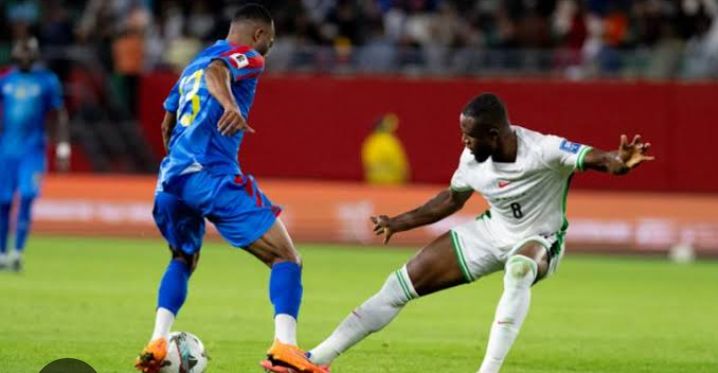
Fast forward four years, and history repeats itself—this time at the hands of DR Congo. The question practically asks itself: did our football authorities ever return to that so‑called drawing board, or is it nothing more than a convenient cliché?
Because if the board truly exists, why are the Super Eagles trapped in the same cycle of failure?
Now, with Nigeria missing out on the 2026 FIFA World Cup in the United States, Mexico, and Canada, the blame is plentiful. Unlike the nation’s “national cake,” it is not scarce—there’s enough to slice between the Sports Commission, the Nigeria Football Federation, and the players themselves.
It hurts especially for the fans, but missing out on the World Cup for the second consecutive time should be seen as a blessing in disguise for the reasons below.
1. Forced rebuild of Nigeria’s football architecture
Missing 2022 was called “a one-off”; missing 2026 proves the problems of Nigeria’s football are systemic. Grassroots, youth development, league structure — everything is now under the spotlight. Sometimes you have to hit absolute rock bottom to start rebuilding the house properly. The Nigeria Football Federation is at that point right now. Missing back-to-back World Cups is the kind of humiliation that finally kills sentiment. There must be a deliberate effort to get things right from the age-grade teams, not just in terms of spotting talents, but feeding them with the right football education and exposure.
2. Change of personnel
If the country’s football must move in that direction, then there must be a change of personnel from top to bottom, starting from the technical director of the football federation. Former player and coach, Austin Eguavoen, has been the head of that department for a while without any meaningful progress over the years. He is saddled with the responsibility of creating and designing a national blueprint that all the national teams should follow, providing technical reports post-tournaments, and recommendations, among other crucial responsibilities. Unfortunately, the department has fallen way below expectations. Hence, a necessary change.
3. Eric Chelle gets a clean slate
The Malian coach inherited an underperforming team, made some bold calls, and dragged the team to the final of the playoffs even though the team lost to DR Congo. Eric Chelle will start on a clean slate ahead of the Africa Cup of Nations next month in Morocco. This will allow him to inject some quality additions to the team, just like he did with Benjamin Fredrick and Akor Adams. He also has the opportunity to address some of the problems the team is currently facing, which includes a “regista” – a player who operates as a deep-line playmaker and dictates the tempo of how the team plays.