
 AFCON 2025


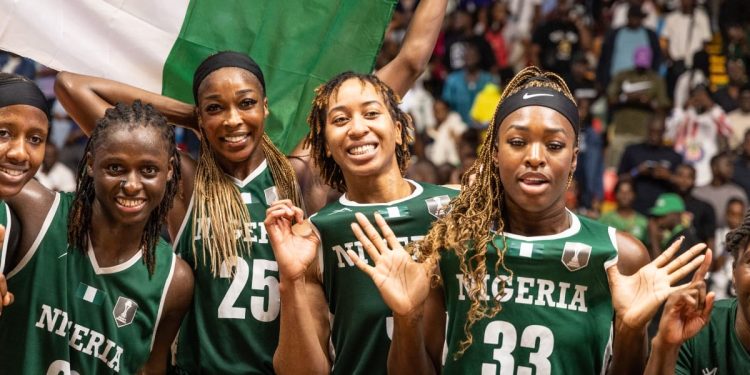
Very few things are working in Nigerian sports, so it is beyond impressive to see our basketball teams continue to thrive despite the obvious limitations.
AFROBASKET CHAMPS!
5 in a row. 🏆🏆🏆🏆🏆
Congrats to @DtigressNG! pic.twitter.com/g30hu8cZ9k
— D’Tigers | Nigeria Basketball (@NigeriaBasket) August 3, 2025
This success story, including the D’Tigress’ record fifth straight FIBA Women’s AfroBasket title in 2025 and the D’Tigers’ historic run at the 2019 FIBA World Cup, owes far more to the talent of the Nigerian diaspora than the leadership of the Nigeria Basketball Federation (NBBF) and sports administrators.
If not for D’Tigress, the Super Falcons, and other female teams, there would have been nothing to be happy about in sports. https://t.co/TOnOfC4UUj
— Mr. A (@Mr_Alawoki) October 9, 2025
The fingerprints of the Nigerian diaspora are everywhere. The bulk of the D’Tigress 2025 squad, including stars like Promise Amukamara, Amy Okonkwo, and Victoria Macaulay, and D’Tigers’ key stars, almost all raised in the U.S. or Europe, bring NBA and top-tier European caliber skills to the national teams.
Nigeria’s basketball scene has largely been hinged on the shoulders of the diaspora, especially because the growth of the sport in Nigeria has been neglected by the administrators.
Nigeria’s dramatic 2012 Olympic qualification, which included stunning wins over Lithuania and Greece, hinged on diaspora talent like Al-Farouq Aminu and Ekpe Udoh, who honed their craft abroad.
The famous 2019 upset over the U.S. men’s team showcased players like U.S.-raised Josh Okogie and Gabe Vincent. Even Nigeria’s impressive 16th FIBA ranking post-2016 Olympics was fundamentally diaspora-driven, proving this reliance on foreign-developed talent is the engine of Nigerian hoops.
The NBBF, meanwhile, continues to stumble. Despite its affiliation with FIBA Africa, the federation struggles with persistent administrative failures. Issues include chronic visa problems for players, severely underfunded facilities, and relying on foreign sponsorships, while allegedly embezzling the funds meant for the growth of the sport in Nigeria.
The core reason for the national team’s reliance on overseas talent is simple: access to elite coaching and exposure.
Overseas, Nigerian kids access top-tier youth programs and major college scholarships, creating a ready pipeline of highly polished athletes.
The recent 2021 AFCON and 2025 AfroBasket wins fundamentally rest on the shoulders of the foreign-born players, who, sometimes, have to fight for the right to wear the jersey.
Some argue the NBBF provides essential groundwork, but without the consistent infusion of diaspora stars, Nigeria’s international success would be virtually impossible.
The NBBF must radically refocus its priorities, infrastructure, and financial accountability to push development at the grassroot level, showing that there is sufficient talent, even back home.