Nigeria, often called the “Giant of Africa,” has built a football reputation based on stars of yesteryears, some stories we were told as kids, and largely the exploits of Kanu Nwankwo, Jay Jay Okocha, and past heroes.
However, today’s reality is vastly different, and not in a good way. For many years, problems with sports administration have hindered the country’s progress.
A football-crazy nation with so much talent should be at the forefront of the game at a continental and global level, yet issues like planning, infrastructure, greed, mismanagement, athletes not getting paid enough, coaches being owed for years, and funds for projects being misused have become part of Nigeria’s story.
He was surprised by a coach asking for money, and, coming from a simple background, chose to play for England instead.
In Nigeria, money is all that matters, and skill, development, and progress are further down the pecking order.
Amaju Melvin Pinnick | President of Nigeria Football Federation 2014-2022
The struggles of grassroots football in Nigeria
Grassroots football, the foundation of the sport, is suffering due to neglect. Young players across Nigeria lack proper training fields, equipment, and coaching, as highlighted by Play More Football Foundation’s Lawrence Okonji in October 2025 after a 4-0 U-20 loss to Argentina.
Investing in youth academies is vital, yet many communities see rundown pitches and no support. This neglect weakens the talent pipeline, with stories of kids playing on dusty lots instead of quality facilities, a stark contrast to nations building from the ground up.
Stadiums tell a similar story of neglect despite big budgets. The National Stadium in Lagos and MKO Abiola Stadium in Abuja, reportedly built for $360 million, are now in poor shape. All football matches of repute in Nigeria are played at the Godswill Akpabio Stadium in Uyo, the only stadium in the country fit for purpose.
It is disappointing when you consider the billions set aside yearly for sports and infrastructure development across the country, but in usual fashion, the people and organisations who need funding the most are routinely neglected.
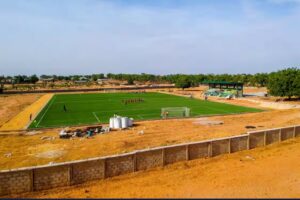
Pictures of the Kebbi stadium show a simple pitch with a small stand and unfinished areas, leading the user to call Nigeria a “crime scene.” Replies suggest the pitch cost just $40,000–$50,000, hinting at misused funds, especially compared to Morocco’s successful $10 million projects or Coastal Carolina’s $5 million facility.
This is yet another story of how corruption has eaten deep into the fabric of the nation, rendering it almost impossible for real growth to take place at the grassroots level.
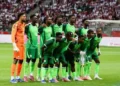
At least they care about the Super Eagles, right? Well, the country’s senior football team are also suffering from administrative incompetence.
The Super Eagles’ struggles to qualify for the 2026 World Cup are a stark continuation of the issues that saw them miss the 2022 tournament.
The current woes are heavily influenced by the Nigeria Football Federation’s (NFF) poor planning in securing a stable technical leadership.
A prolonged vacancy and the delay in appointing a permanent head coach meant the team lacked direction during crucial early qualifiers.
This lack of preparation and instability led to disappointing performances, including draws against lesser-ranked teams. Had the Super Eagles secured maximum points in these fixtures, they would likely have been competing for automatic qualification from their group.
Instead, their stuttering campaign and failure to win key home games have now forced them into a risky and challenging path through the playoffs, increasing the danger of missing a second consecutive World Cup.

 AFCON 2025