 AFCON 2025


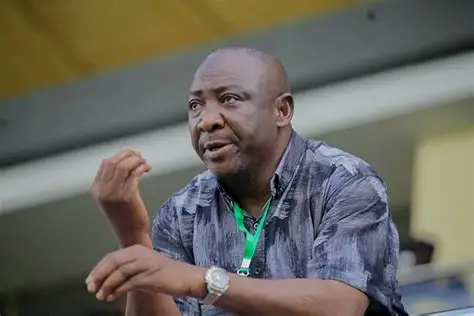
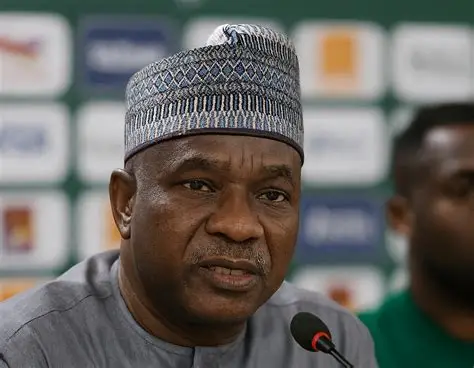
When Ibrahim Musa Gusau was elected president of the Nigeria Football Federation in September 2022, he inherited a football system already carrying significant baggage.
Nigeria had missed the 2022 FIFA World Cup. National-team players were owed bonuses. The federation had long faced questions over its administration and finances, while the domestic game continued to struggle with structural problems.
Gusau, therefore, did not start with a clean slate.
But four years later, his presidency ended with an uncomfortable assessment of its own: the problems he inherited were not only unresolved in several areas, some became significantly worse.
The Super Eagles missed another World Cup. The Super Falcons lost a qualification record that had stood since 1991. Nigeria’s youth teams struggled to maintain their traditional presence at major tournaments, while questions over the federation’s finances and governance increasingly overshadowed its achievements.
And eventually, the president and the entire NFF executive committee resigned.
The World Cup failures
The most obvious measure of the administration’s performance is the state of Nigeria’s senior national teams.
The Super Eagles failed to qualify for the 2026 World Cup after losing to DR Congo on penalties in the African playoff final. The defeat confirmed Nigeria’s second consecutive absence from the men’s World Cup.
That failure was particularly difficult to defend because Africa’s allocation had expanded significantly for the 2026 tournament.
Nigeria had more opportunities than ever to qualify, yet the Eagles still fell short. Then came an even more historic setback.
The Super Falcons failed to qualify for the 2027 Women’s World Cup, bringing an end to Nigeria’s uninterrupted participation in the competition since its inception in 1991.
The Falcons were eliminated by Cameroon in the WAFCON quarter-finals before losing 2-1 to South Africa in the subsequent World Cup qualification playoff.
For a country that had never missed a Women’s World Cup, it represented a profound break with tradition.
The significance was bigger than one result.
Nigeria had built a reputation as the dominant force in African women’s football. The Falcons’ consistency had made them one of the country’s most dependable national sporting institutions.
By the end of Gusau’s tenure, both of Nigeria’s senior national teams had missed the World Cup in the same cycle.
The production line has also weakened
Nigeria’s football strength has historically depended on its youth teams.
The Golden Eaglets and Flying Eagles have served as the country’s talent factory, providing a pathway through which young players gained international experience before progressing to the senior national team.
Nigeria’s record at youth level has been extraordinary.
The Golden Eaglets are five-time FIFA U-17 World Cup champions, while the Flying Eagles have consistently been among Africa’s strongest youth sides.
Yet that production line has become increasingly unreliable.
The Golden Eaglets have missed consecutive U-17 World Cups, with Nigeria also failing to qualify for recent editions of the U-17 Africa Cup of Nations.
The Flying Eagles, meanwhile, suffered another setback in 2026 when they lost heavily to Burkina Faso in the WAFU B U-20 final, missing out on qualification for the continental tournament.
It would be unfair to suggest Gusau created these problems. The decline in Nigeria’s youth football predates his presidency.
But that is precisely where the criticism of his administration becomes stronger: the decline was not reversed.
For a nation that once regarded qualification for youth tournaments almost as a birthright, repeated absences are a warning about the future.
When the Eaglets and Flying Eagles disappear from major tournaments, the consequences are not confined to those age groups. The Super Eagles of the next decade are affected too.
Coaching instability became a recurring problem
The technical direction of the Super Eagles also lacked continuity.
José Peseiro guided Nigeria to the 2023 AFCON final before leaving his position. Finidi George was subsequently appointed but departed after only a short spell.
Then came the extraordinary Bruno Labbadia episode.
The NFF announced the German as the new Super Eagles coach in August 2024, only for the appointment to collapse before he took charge because of a disagreement over tax obligations.
Augustine Eguavoen once again became the interim solution. Later, Eric Chelle was appointed as permanent head coach.
Changing coaches is not automatically evidence of poor administration. Football is an unstable business and managers regularly leave.
The concern was the absence of a convincing long-term technical direction.
Nigeria appeared to spend too much time responding to problems rather than building a stable football structure capable of anticipating them.
The financial questions
If the sporting failures damaged confidence, the financial controversies damaged trust.
The Federal Government provided a major intervention fund in 2024 to help address outstanding salaries, bonuses and other financial obligations involving the national teams.
Yet payment disputes continued to surface.
Players and coaches repeatedly raised concerns about unpaid entitlements, while the Super Eagles’ World Cup qualification campaign was affected by disputes over bonuses and logistics.
More seriously, the EFCC confirmed that its investigation into the utilisation of a ₦12 billion intervention fund remained ongoing.
It is important to draw a clear distinction here.
An investigation is not proof of wrongdoing, and there has been no court judgment establishing that Gusau or members of his administration committed a financial crime.
But from an institutional perspective, the damage is still significant.
A football federation cannot easily command public confidence when questions surrounding the management of public funds are being investigated by anti-corruption agencies.
The achievements should not be ignored
There is another side to the Gusau story. His administration did deliver significant successes.
The Super Eagles reached the 2023 Africa Cup of Nations final, while the Super Falcons won the 2025 Women’s Africa Cup of Nations.
There were also efforts to improve infrastructure and football development, including projects at the MKO Abiola National Stadium and investments in facilities for national teams.
These achievements matter because they show that the Gusau presidency was not devoid of progress.
The problem is that the successes were increasingly overshadowed by the failures around them.
A federation can win a continental trophy and still be struggling institutionally.
The Falcons’ AFCON triumph, for example, was an outstanding sporting achievement. But barely a year later, the same team lost Nigeria’s previously unbroken World Cup qualification record.
That contrast captures the complexity of the Gusau years.
There were moments of genuine success, but they existed alongside increasingly serious structural problems.
Ultimately, the most striking feature of the ending was not simply Gusau’s resignation; The entire NFF executive committee went with him.
The president, general secretary and members of the executive committee all stepped aside, creating a leadership vacuum at a moment when Nigerian football desperately needed stability.
That is why the legacy of the Gusau presidency cannot be reduced to a list of wins and losses.
He inherited a broken system.
But after four years, the system remained broken in many of the areas that mattered most.
The Super Eagles were still outside the World Cup.
The Super Falcons were no longer guaranteed a place on the global stage. The youth pathway was producing fewer major tournament appearances. Financial questions had reached the desks of Nigeria’s investigative agencies.
And the federation itself ended the administration in a state of upheaval. The next NFF leadership therefore faces a task much larger than replacing Gusau.
It must rebuild credibility. It must restore confidence in the management of national-team finances. It must create a coherent technical structure for the national teams. It must repair the youth development pipeline and, perhaps most importantly, reconnect the federation with the players and supporters it represents.
Because the ultimate judgment of the Gusau era will not be determined by what happened between September 2022 and August 2026 alone.
It will be determined by what happens to Nigerian football after August 2026.
If Nigeria returns to the World Cup, rebuilds its youth teams and establishes a more transparent and professional federation, the Gusau years may eventually be remembered as a difficult chapter in a longer rebuilding process.
If the decline continues, however, his presidency could be remembered as the period when Nigeria’s football problems stopped looking temporary and began to look structural.