
 AFCON 2025


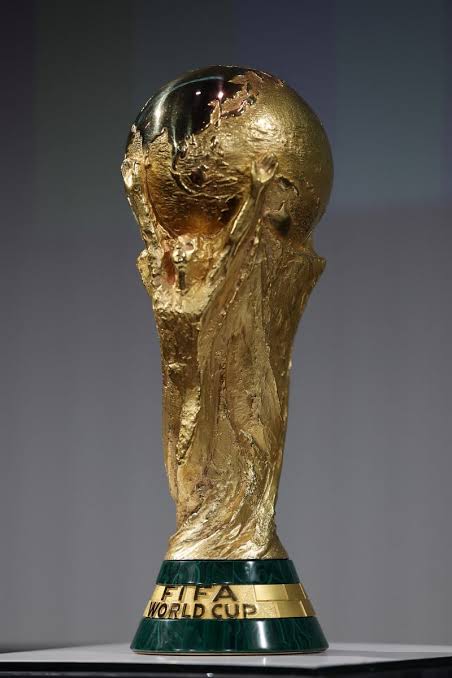
Ahead of the FIFA World Cup 2026, football’s law-making body, the International Football Association Board (IFAB), has approved a major set of rule changes aimed at improving the flow of the game, reducing time-wasting, and enhancing officiating standards.
The tournament, which will be jointly hosted by the United States, Canada, and Mexico, will be the first major competition to implement the new regulations.
According to information published on FIFA’s official website, the revised laws cover several aspects of the game, including substitutions, VAR intervention, player conduct, and time management.
One of the most notable changes is the introduction of a visible five-second countdown for throw-ins and goal kicks. Players who fail to restart play within the allotted time risk conceding possession or even a corner kick to the opposition.
Substitution procedures have also been tightened. Players being replaced must leave the pitch within 10 seconds using the nearest boundary line. Failure to do so could delay the entry of their replacement until the next stoppage after one minute of play.
To discourage players from exaggerating injuries, outfield players who receive on-field treatment will now be required to remain off the field for at least one minute after play resumes. Exceptions will apply in cases involving goalkeepers, serious injuries, head injuries, goalkeeper-player collisions, and specific penalty situations.
The powers of the Video Assistant Referee (VAR) have been expanded significantly. VAR officials will now be able to intervene in cases of clearly incorrect second yellow cards leading to red cards, mistaken identity incidents, wrongly awarded corner kicks, and fouls committed before set-piece restarts.
In a move aimed at improving transparency and combating abusive behaviour, players who cover their mouths while confronting opponents may face red-card sanctions. The measure is intended to discourage discriminatory abuse and hidden misconduct during matches.
The new laws also introduce stricter sanctions for players and teams that walk off the pitch in protest of refereeing decisions. Players involved may be sent off, while teams that abandon matches risk forfeiting the contest. Team officials encouraging such actions could also face disciplinary measures.
Referee body cameras could also become a feature at the World Cup, with competition organizers granted the authority to permit officials to wear chest-mounted or head-mounted cameras during matches.
Additional changes include revised equipment regulations allowing certain previously prohibited items, provided they are safe and securely fastened, as well as clarification on dropped-ball restarts and accidental double touches during penalty kicks.
IFAB has also amended the Denial of an Obvious Goal-Scoring Opportunity (DOGSO) rule. Under the new interpretation, a player will avoid a caution if advantage is played and a goal is ultimately scored despite the offence.
International friendly matches will see greater flexibility with substitutions, allowing teams to use up to eight substitutes, with the possibility of increasing the number to eleven through mutual agreement.
Given the expected high temperatures at several World Cup venues, referees will also be permitted to introduce a three-minute hydration break in each half, typically around the 22nd minute, depending on weather conditions.
Meanwhile, the goalkeeper time-wasting rule introduced prior to the tournament remains in effect. Goalkeepers may hold the ball for a maximum of eight seconds, with referees visibly counting down the final five seconds. Any violation will result in a corner kick being awarded to the opposing team.