 AFCON 2025


Nigeria’s 2027 Africa Cup of Nations qualifying campaign suffered a major setback on Tuesday as Guinea-Bissau stunned the Super Eagles 3-0 at the Estádio 24 de Setembro.
Franculino Djú put the hosts ahead after 15 minutes before Mama Baldé doubled their advantage in the 66th minute. Substitute Álvaro Djaló then completed the rout deep into stoppage time as the Djurtus moved to the top of Group L with six points from two matches.
Nigeria enjoyed more possession and created periods of pressure, but the Super Eagles struggled to turn that control into clear-cut chances. By the time they pushed forward in search of a way back, Guinea-Bissau had already established a comfortable platform from which to defend and counter.
Here are three key takeaways from a damaging night for Nigeria.
1. Nigeria paid the price for another slow start
Guinea-Bissau began with greater intensity, attacked the spaces down Nigeria’s right and eventually found the breakthrough through Djú, who curled a fine effort into the far corner after 15 minutes.
Once again, Nigeria had conceded first away from home and were forced to chase the game.
The Super Eagles eventually saw more of the ball, but possession did little to change the scoreline. Guinea-Bissau were comfortable sitting deeper, protecting their lead and waiting for opportunities to attack the spaces Nigeria left behind.
That approach paid off.
Baldé made it 2-0 in the 66th minute after a move involving Mamadi Camará, while Djaló finished a late counter-attack in stoppage time to complete the victory.
The bigger concern for Éric Chelle will be how often Nigeria’s defensive structure was exposed once they pushed numbers forward.
The Super Eagles cannot afford to repeatedly give opponents an early advantage and expect their attacking quality to rescue them.
2. Possession meant little without a cutting edge
Chelle altered his attack from the side that defeated Madagascar, with Taiwo Awoniyi starting ahead of George Ilenikhena. Ademola Lookman and Alex Iwobi were tasked with providing creativity, but Guinea-Bissau largely managed to keep Nigeria away from dangerous areas.
Lookman came closest in the first half when Iwobi found him inside the box, only for goalkeeper Manuel Embadjé to make the save.
Chelle responded by introducing Moses Simon and Moses Usor after the break, before Ilenikhena and Raphael Onyedika were also brought on.
The changes added energy, but they did not fundamentally alter the game.
Nigeria continued to circulate possession without consistently creating the kind of chances that could have changed the momentum. Ilenikhena had another opportunity late on, but Guinea-Bissau’s defence and goalkeeper stood firm.
Victor Osimhen’s absence was inevitably felt. Without the Galatasaray striker, Nigeria needed someone capable of occupying the centre-backs, stretching the defence and turning possession into genuine danger.
That did not happen often enough.
The lesson is straightforward: having the ball is not the same as controlling a football match. Nigeria needed more movement in the final third, better execution in the final pass and greater ruthlessness in front of goal.
3. Group L has suddenly become a serious problem
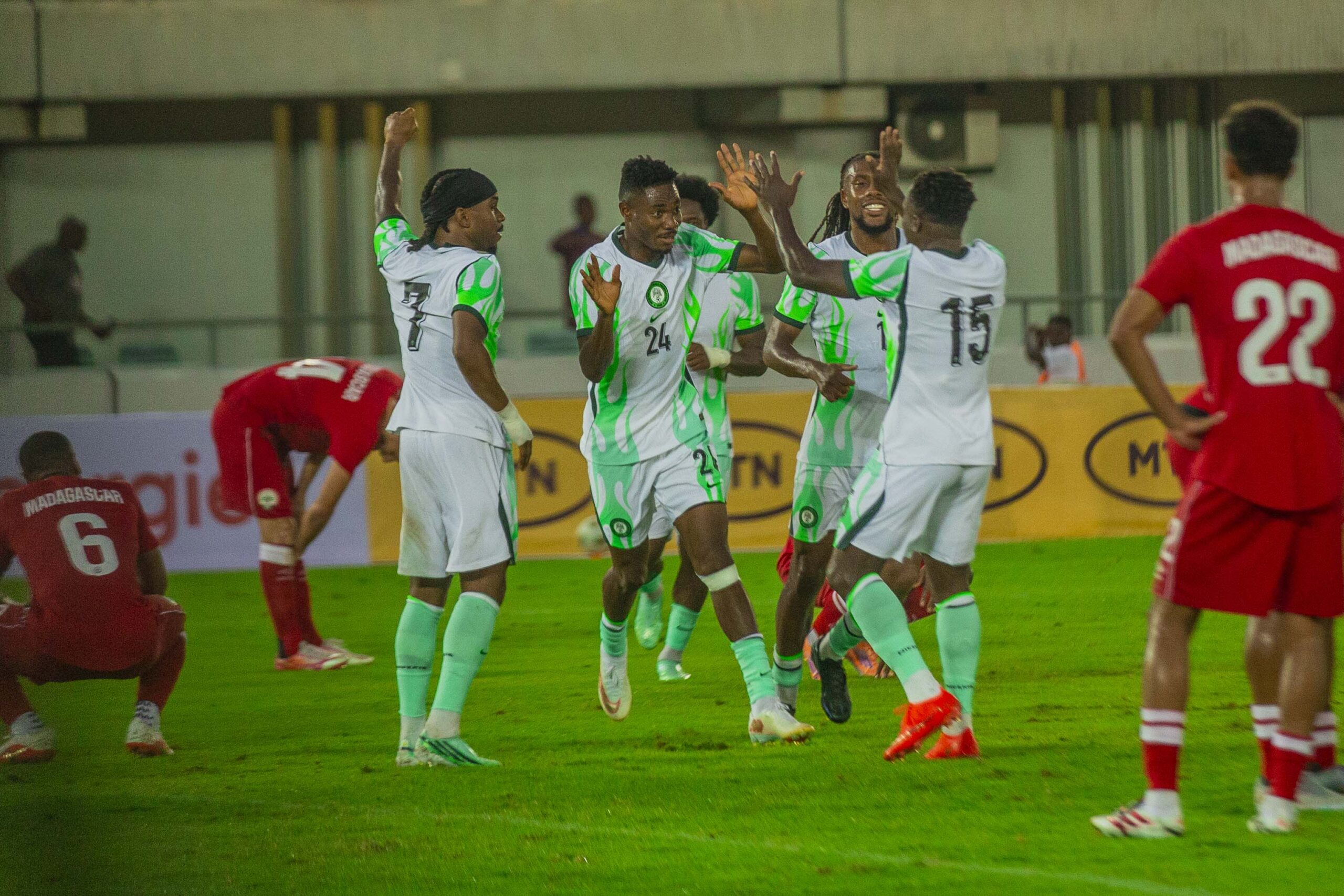
Nigeria began the qualifiers with a 2-1 victory over Madagascar. After Tuesday’s defeat, however, the Super Eagles have just three points from their opening two matches and a goal difference of -2.
Guinea-Bissau, meanwhile, have six points from two games and have already established themselves as the early leaders.
With Tanzania and Madagascar also in the group, the margin for error has become considerably smaller.
For Nigeria, the 3-0 defeat is particularly damaging because it was not simply a loss of three points. The Super Eagles also suffered a significant blow to their goal difference against one of the teams competing for qualification.
Every remaining fixture now carries greater weight.
Chelle will also have to find answers quickly. His team struggled to deal with Guinea-Bissau’s intensity, lost too many second balls and could not find enough solutions once the hosts settled into their defensive shape.
The response will matter as much as the defeat itself.
The road ahead
Guinea-Bissau deserved their victory. They were aggressive from the start, defended their advantage intelligently and punished Nigeria when spaces opened up.
For the Super Eagles, the night exposed familiar problems: a slow start, vulnerability in transition and a lack of cutting edge in the final third.
Nigeria still have time to recover their qualifying campaign, but the margin for error has narrowed considerably.