 AFCON 2025



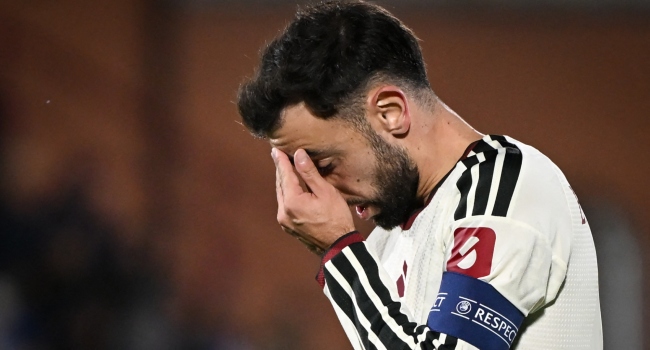
Manchester United’s 2026/27 campaign is already in free-fall. Seven points from seven Premier League games, 13th place, a goal difference of zero and a seven-game winless run across competitions that culminated in a humiliating 4-1 Champions League defeat at Como on Wednesday night.
This is the club’s worst start to a top-flight season since 1986-87. Michael Carrick, the man who steadied the ship last season and earned a permanent deal after guiding United back into Europe, now finds himself under intense pressure with questions mounting from the pitch, the stands and even the dressing room.
Here are the three clearest problems.
1. A passive, identity-less approach that keeps surrendering control
Carrick’s side has drifted into a cautious, possession-heavy style that lacks the intensity and aggression that defined the better periods of last season.
United are averaging nearly 60% of the ball in the Premier League yet struggle to turn that dominance into clear-cut chances. Shots are frequent but low quality, the average non-penalty attempt carries just 0.08 expected goals, among the worst in the division and the team repeatedly shoots from distance.
The pattern is becoming familiar: slow starts, leads surrendered, and an inability to kill games even when opponents are reduced to ten men.
They failed to beat 10-man Manchester City and 10-man Tottenham at Old Trafford. They threw away a two-goal lead against Brighton in the Carabao Cup. Late equalisers have become routine. Bruno Fernandes, after the Como defeat, publicly called for the team to “be more brave.”
The captain’s words landed like a quiet rebuke of the current tactical setup. Without higher pressing intensity, quicker transitions and a clearer attacking identity, United look flat and predictable.
2. A fragile defence compounded by a growing injury crisis
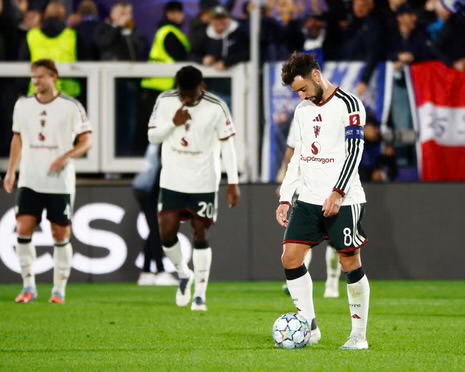
United have kept just one clean sheet in all competitions this season, against Azerbaijani side Sabah. In the Premier League they have conceded 10 goals in seven matches and have been porous from set pieces, crosses and individual errors. The back line lacks cohesion and athleticism at key moments.
Injuries have turned a structural weakness into a full-blown crisis. Benjamin Sesko, the primary centre-forward, is feared to be out for up to four months with a shin problem. Luke Shaw’s fitness issues have left the left-back position chronically short.
Lisandro Martínez, Kobbie Mainoo, Marcus Rashford and others have been sidelined at various points, while Leny Yoro is suspended. Carrick has been forced into makeshift solutions, centre-backs at full-back, wingers as centre-forwards and the squad’s lack of reliable depth is being ruthlessly exposed. A team that cannot defend consistently or field its strongest XI week after week is always one step from another damaging result.
3. Recruitment that left the squad unbalanced and the hierarchy under fire
United spent heavily on midfielders in the summer; Carlos Baleba, Youri Tielemans and Andrey Santos arrived for a combined outlay of around £155m but left glaring gaps elsewhere.
No left-back was signed to cover Shaw’s long-standing injury problems. No additional centre-forward arrived despite Sesko’s known fragility. The result is a squad that looks unbalanced the moment key players are missing.
Lisandro Martínez’s post-Atlético Madrid outburst, in which he criticised the board and director of football Jason Wilcox for inadequate support, laid the internal frustration bare.
Squad value has also depreciated significantly in recent years, and financial constraints under the current ownership structure mean the days of big-statement signings appear limited. The midfield reinforcements have yet to transform the team, and the failure to address defensive and attacking depth has left Carrick short of options at the worst possible time.